Problem-solving guide
Carry handle replacement checklist for luggage
Record mounting centers, base footprint, grip length, folding/return geometry, mounting posts and the exact suitcase identity before comparing a top or side carry handle.
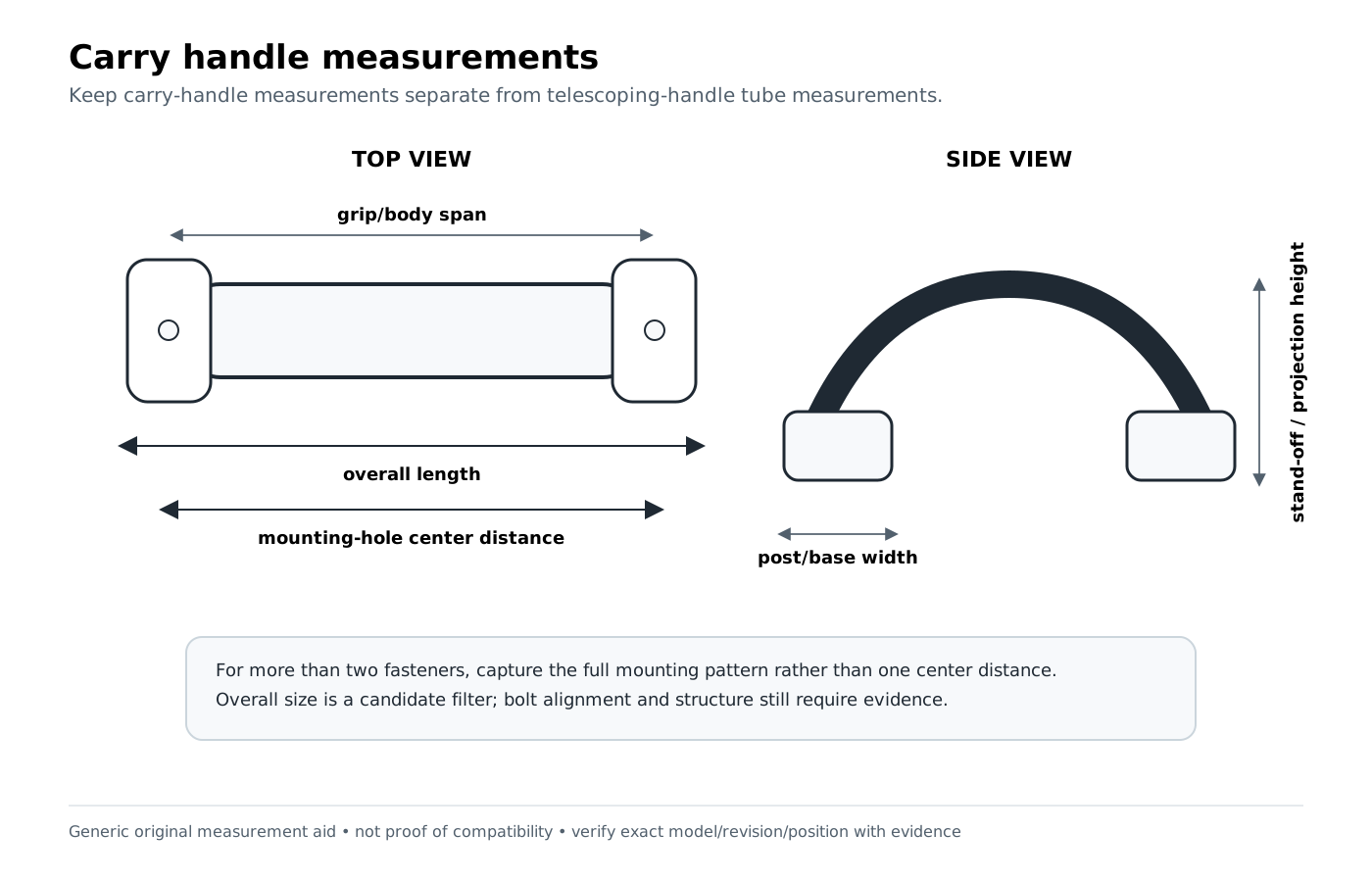
People-first rule: Start with the failure or identification question, then collect evidence. Do not shop by appearance first and work backward toward a fit claim.
Core user job: Distinguish a true mounting/geometry match from a similar-looking carry handle.
Pre-order checklist
| Field | Record | Why |
|---|---|---|
| Suitcase identity | Brand, collection, style/product ID, size and production generation | Generation boundaries can override a physical resemblance. |
| Mounting centers | Center-to-center between attachment points; note whether there are two or four fixings | Handle length alone does not describe the interface. |
| Base footprint | Length/width/shape of each mounting foot or post | A grip can match while the base does not seat correctly. |
| Grip geometry | Grip length, overall length, width/height | Helps reject obviously wrong candidates. |
| Folding/return geometry | Does it lie flat, spring/return, retract into posts, or remain fixed? | Clearance and mechanism differ across handle families. |
| Mounting kit | Posts, plates, screws, backing pieces; whether source says included | The visible strap/grip may be only one part of the repair kit. |
Why carry handles are easy to misidentify
Top and side carry handles are visually simple, so listings often look interchangeable. In practice the hidden posts, plates, screw spacing, base footprint and production window can be the decisive details. A handle can be the right length and still be the wrong generation or mounting system.
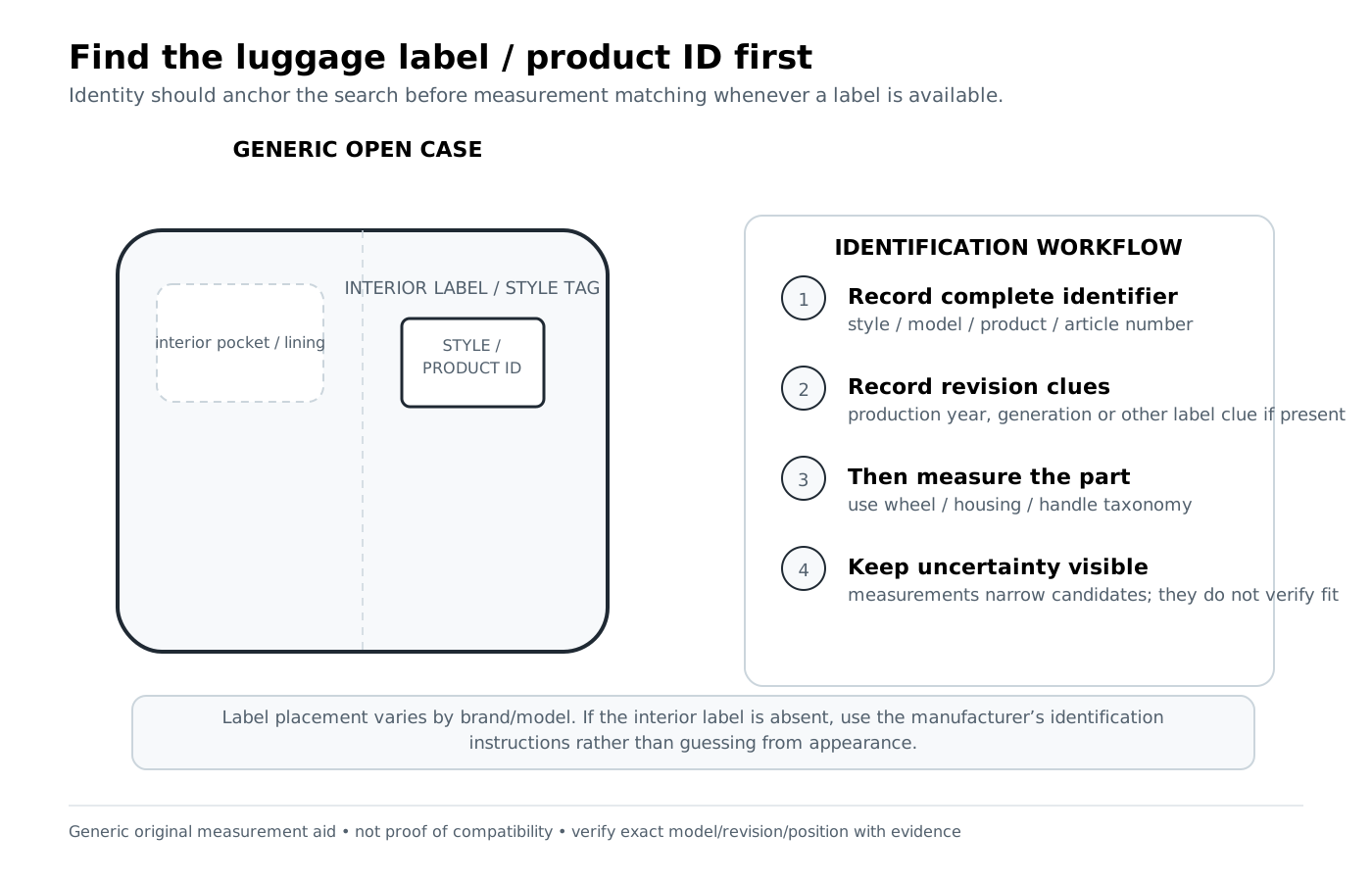
Identification workflow
- Capture the suitcase style/product ID and production/revision clue.
- Determine whether you are identifying a top handle, side handle or a handle integrated with another frame/feature.
- Record mounting centers and number of attachment points.
- Measure each mounting base/footprint, not only the flexible grip.
- Describe return behavior: fixed, folding, spring-return or retracting.
- Note whether posts/plates/backing hardware remain intact.
- Search the exact style and part ID before comparing measurement-led candidates.
Common misidentification patterns
- Choosing by color and overall grip length.
- Assuming two 9-inch handles share the same posts and production window.
- Ignoring that a repair kit may include backing plates and screws specific to a generation.
- Measuring screw-hole edges instead of centers.
- Using one generic seller statement to override an explicit manufacturer generation boundary.
Accepted database examples
| Accepted database example | Checklist lesson | State |
|---|---|---|
| Briggs & Riley ACC-9612-4 | Official repair kit is mapped to Baseline styles manufactured through March 2022 and includes posts, plates and screws. The mounting system is more than the visible grip. | VERIFIED |
| Briggs & Riley ACC-5113-5 | A navy SKU-specific page carries a narrower 2017–March 2022 fit window. Color/SKU and production window can matter even when geometry is similar. | VERIFIED |
| Post-March-2022 Baseline vs ACC-9612 family | The accepted database preserves the production-window boundary instead of extending an older kit into a later generation. | DOES_NOT_FIT |
Boundary: Matching handle length or screw-center spacing alone is not enough. Production generation, base footprint, posts/plates, folding clearance and source-backed model scope still matter.