Problem-solving guide
Telescoping luggage handle replacement checklist
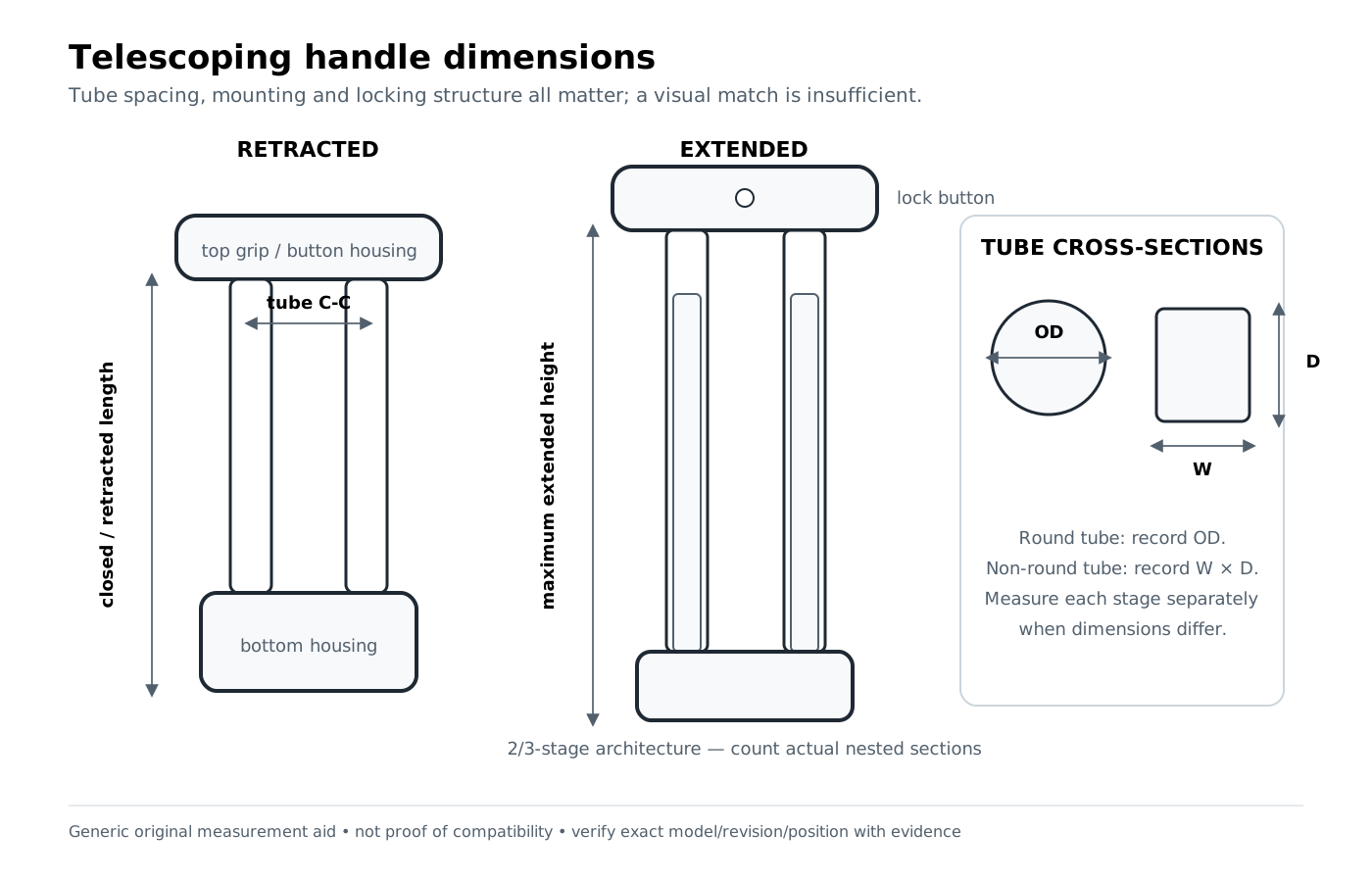
Before ordering, capture the suitcase style ID and revision plus stage count, tube spacing, tube size, closed/extended length, mounting interface and lock architecture.
People-first rule: Start with the failure or identification question, then collect evidence. Do not shop by appearance first and work backward toward a fit claim.
Core user job: Collect enough identity and geometry before comparing a replacement handle.
Pre-order checklist: collect identity before geometry
| Priority | Field | What to capture |
|---|---|---|
| 1 | Suitcase identity | Brand, collection, exact style/product ID, revision/generation and size. |
| 2 | Exact part evidence | OEM/service part number or manufacturer repair-kit mapping, if available. |
| 3 | Stage architecture | 2/3/4-stage count, external vs internal mounting, top-grip/button style. |
| 4 | Tube geometry | Center distance, tube section, overall width, closed/extended length. |
| 5 | Mounting interface | Top/bottom brackets, fixing count, hole locations, bezel/base shape. |
| 6 | Lock behavior | Designed latch positions and release architecture—not just current failure symptom. |
Why one matching number is not enough
W025/W043 evidence contains multiple distinct telescoping components that share center distances. A 130 mm or 135 mm center distance can occur on different stage counts or mechanisms. That is why the checklist intentionally requires a cluster of identifiers.
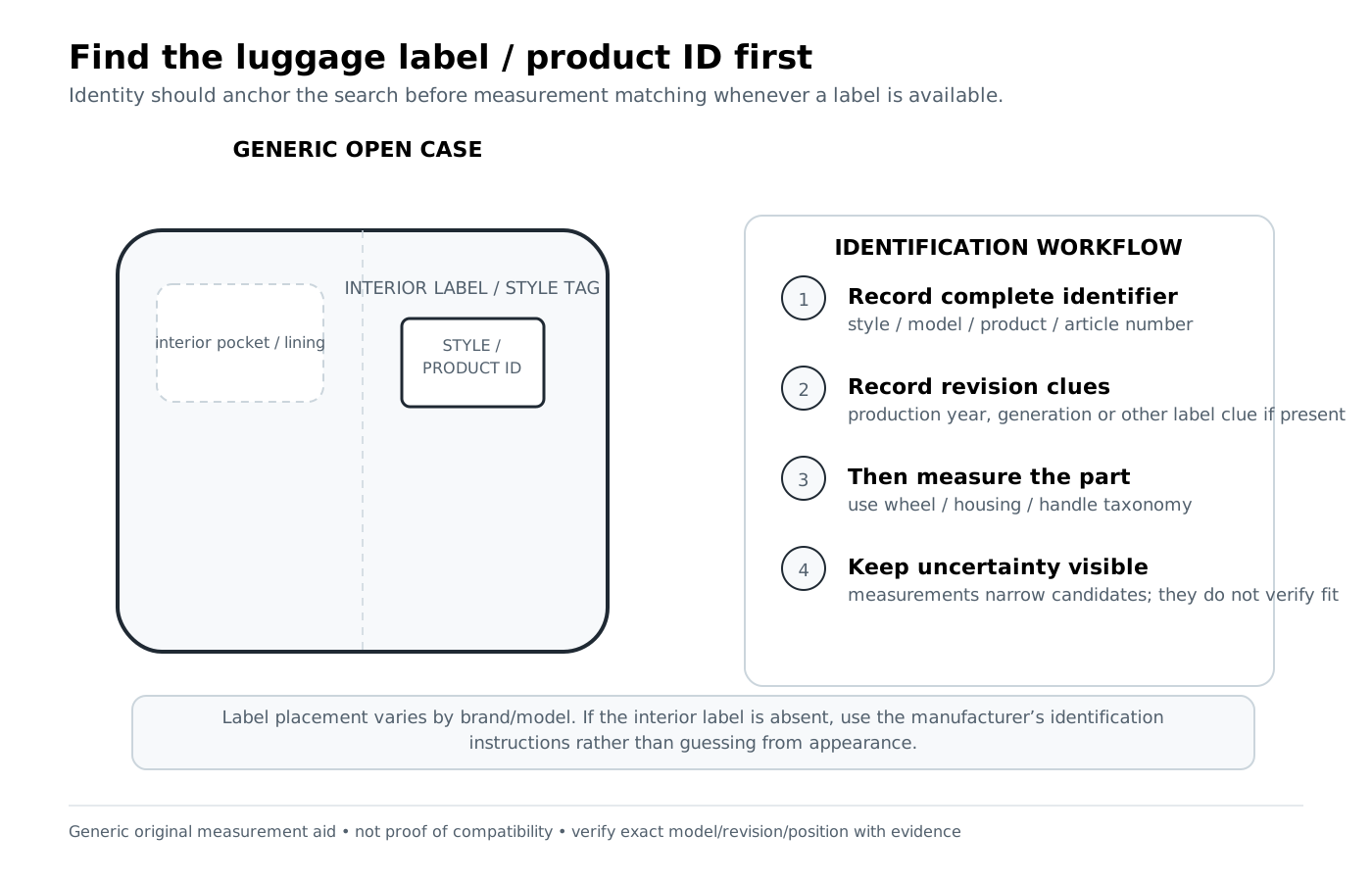
Identification workflow
- Start from the sewn/shell label and preserve the exact punctuation/suffix of the style ID.
- Search the database for the style ID before measuring.
- Count stages when fully retracted/extended without force.
- Measure tube center distance at the same reference point on both tubes.
- Measure tube section and overall handle width; record units explicitly.
- Record closed length and, if practical and safe, designed extended length.
- Photograph/describe top and bottom mounting brackets and any bezel.
- Compare exact service mapping first, then use geometry to eliminate candidates.
Common ordering mistakes
- Using case height (“fits 20–24 inch luggage”) as a precise fit claim.
- Using center distance without stage count or tube section.
- Ignoring a different external/internal mounting style.
- Assuming hardware is included because a photo shows it.
- Converting a specialist’s measurement-led LIKELY candidate into a VERIFIED suitcase fit.
Accepted database examples
| Accepted database example | Checklist lesson | State |
|---|---|---|
| JX8032 | 159 mm center distance, external/detachable architecture and 2/3 stages. Center spacing is only one field in the identification record. | LIKELY |
| JX8183 | 134 mm center distance with 2/3 stages and an additional R descriptor. A 25 mm center-spacing difference is enough to eliminate a candidate, but a match would still not prove fit. | LIKELY |
| Travelpro P4036H0002 | Exact manufacturer mapping to a specified style demonstrates why the suitcase label/style ID should be collected before relying on generic measurements. | VERIFIED |
Boundary: Center distance or overall length alone is not fit proof. Distinct handles can share those measurements while differing in stage architecture, lock mechanism, tube section or mounting-hole positions.