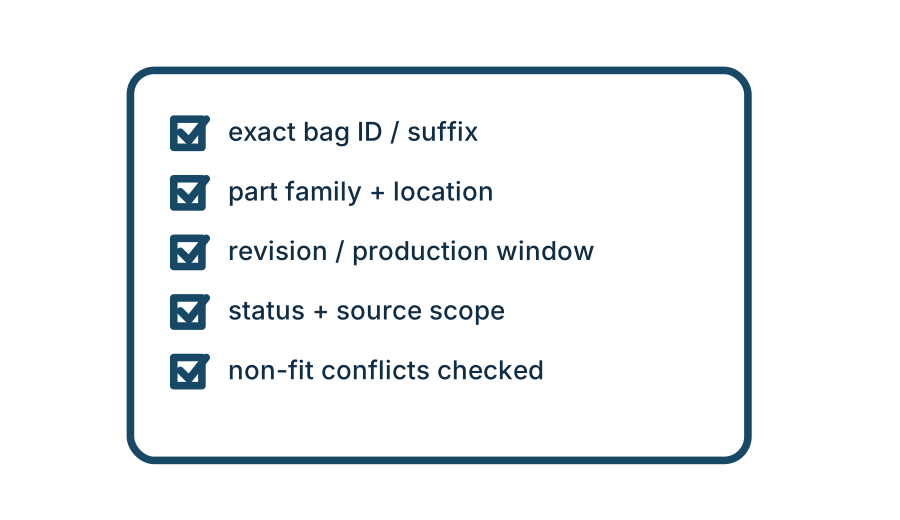
Exact luggage identity: capture the complete model/style/product ID, including suffixes and regional variants.
Correct component: distinguish wheel from housing, zipper pull from slider, lock presence from replacement lock, foot from guard, and service hardware from retail spare.
Position/location: verify left/right/front/rear, main compartment, interior sleeve, rear guard, or other stated location.
Revision or production window: do not merge adjacent generations.
Identifier provenance: know whether the number is OEM, specialist/aftermarket, or generic marketplace.
Status: read VERIFIED, LIKELY, UNVERIFIED or DOES_NOT_FIT together with its compatibility basis.
Negative evidence: search the same part number/family for DOES_NOT_FIT rows and conflict notes.
Dimensions: use geometry to eliminate mismatches; never let dimensions override an explicit source conflict.
Source scope: distinguish exact spare-part fit from component presence, collection accessory or repair-service capability.
Missing proof: if the exact mapping is still missing, use the manufacturer product-code/serial/service workflow rather than guessing.
Three common stop signs
DOES_NOT_FITWrong generation
ACC-ZP10 is explicitly outside a later Baseline zipper-pull window.
What it proves: The generation mismatch is known.
What it does not prove: Similarity cannot rescue a known exclusion.
Stop if a DOES_NOT_FIT record matches your bag, revision, size or position. A different positive record for another scope is not permission to ignore the conflict.