How to measure a luggage wheel
Measure the wheel as a system, not just a circle. Record outer diameter, wheel/tread width, bore or axle interface, any bearing/spacer stack and the clearance available inside the housing. Equal diameter alone does not prove compatibility.
Preparation checklist
- Metric ruler or calipers; measure in millimetres where possible.
- The old wheel removed only if it can be done safely and without destroying the mounting reference.
- Photos of both sides of the wheel, axle/fastener stack and its installed clearance.
- Product/style ID and wheel position recorded first.
- Separate notes for wheel-only dimensions and housing dimensions.
Step-by-step wheel measurement
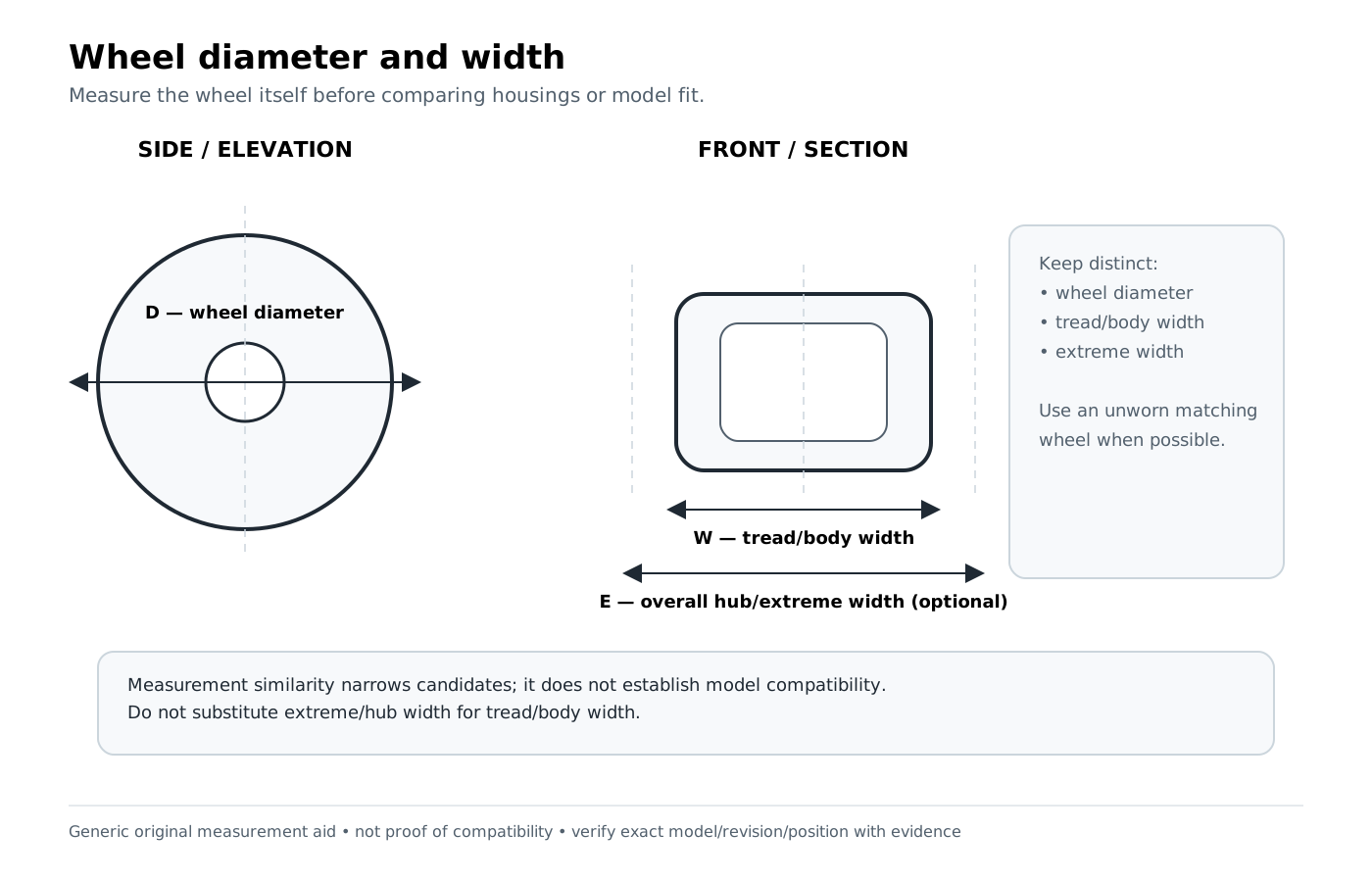
- Diameter: measure straight across the wheel through its center, from tread edge to tread edge. Do not measure the housing.
- Wheel width: record tread/rim width. If bearings or hub shoulders make the total assembly wider, record that separately.
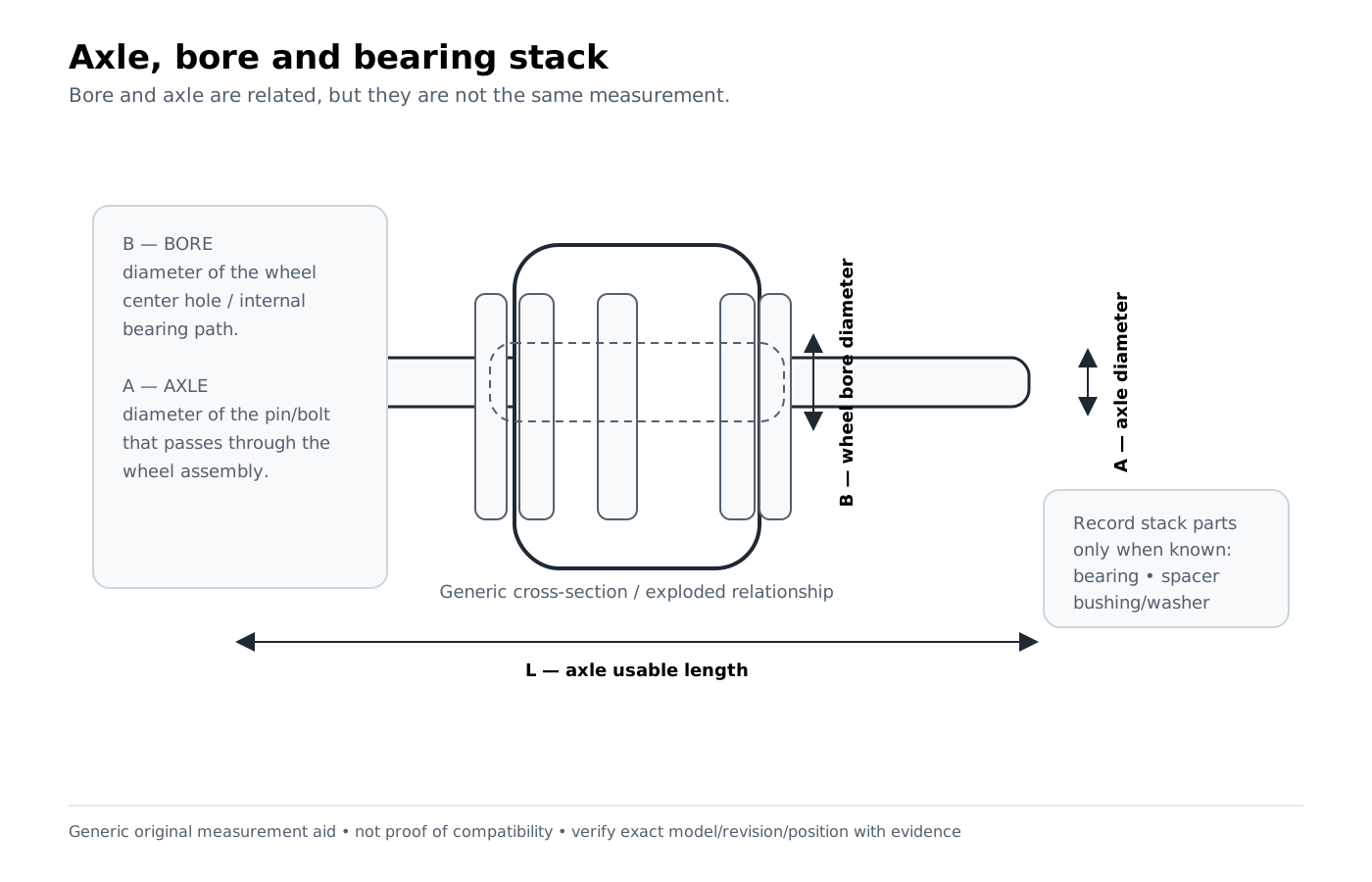
- Bore and axle: distinguish the wheel’s center/bearing ID from the axle bolt diameter. Also record usable axle length, spacers, washers and bushings.
- Tread/profile: note rounded vs flat tread, bearing arrangement and any offset hub. These details can alter clearance even when nominal diameter matches.
- Installed clearance: check side clearance, sweep clearance and space between wheel and housing/shell under load.
- Compare a multi-field signature: diameter + width + bore/axle + stack + clearance. Then check identity, position and revision before treating the candidate as compatible.
Worked examples from project data
Example 1 — diameter can be useful when fit is independently source-backed
A Briggs & Riley Baseline large quick-change wheel kit in the accepted data records a 82.55 mm wheel diameter and a defined Baseline production window. Its product-to-kit relationship is VERIFIED because the fit window and SKU relationship are explicitly sourced—not because 82.55 mm by itself proves fit.
Example 2 — a dense measurement signature is still only a candidate
An accepted wheel-only candidate records 45 mm diameter, 18 mm rim width, 21 mm total width, 6 mm bore and supplied 33/36 mm axle lengths. That record is LIKELY: the measurements are useful, but there is no exact luggage model crosswalk.
What to learn: a 45 mm match alone is weaker than the full signature, and even the full signature does not create a VERIFIED fit claim.
Common mistakes
- Measuring across the housing instead of the wheel.
- Calling the bore diameter “axle size” without checking the bearing or bushing.
- Ignoring total hub width and spacer stack.
- Choosing a candidate because diameter matches while the wheel rubs the housing or shell.
- Mixing wheel-only measurements with spinner-assembly or housing measurements.
When measurements are not enough
Measurements cannot resolve a documented generation, position or product-class conflict. A dimension-matched candidate should stay a candidate until the evidence supports the exact scope. An explicit non-fit source must override an apparent physical match.
How to interpret the evidence
Identification clue means something you can observe or measure—an ID, position, diameter, hole pattern, stage count or mounting detail. A clue narrows the search but does not prove fit. A candidate match means several clues align well enough to investigate. Source-backed compatibility requires explicit evidence within the stated product, revision, position and part scope.
VERIFIED
Explicit source-backed relationship within the stated scope.
LIKELY
Identifiers or measurements align, but explicit authoritative fit is incomplete.
UNVERIFIED
Candidate or component-presence evidence only; not a confirmed replacement fit.
DOES_NOT_FIT
Explicit conflict, exclusion, wrong position, wrong revision, or non-fit evidence.
Where to go next
Use Search once you have identifiers or measurements. You can also browse Products, Part IDs, or the relevant part-type directory.
Related guides: Full wheel-housing geometry · Mounting-pattern checklist · Wheel position basics
How this guide was prepared
This guide was prepared by the Luggage Parts Guide Editorial Team from source-tracked project data and original brand-neutral diagrams (wheel diameter/width diagram, axle/bore stack diagram). Measurements and identifiers are used as identification evidence, not as substitutes for explicit fit documentation. See the Editorial Policy and Methodology.
Reviewed: October 6, 2026